Musicology Department Hebrew University, Jerusalem
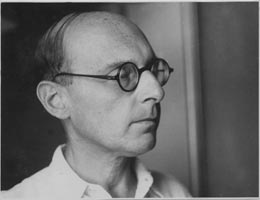
Varda Kotler performs Paul Ben-Haim
PAUL BEN-HAIM (1897-1984) GERMAN AND HEBREW LIEDER
9 Songs without Words
(1952)
a. Arioso - b. Ballad - c. Sephardi melody
Ben-Haim's model for the Songs without
Words was Ravel's Vocalise (better known as the Havanaise). They represent
Ben-Haim's most radical endeavor to reach to the East through the predominance
of the melodic parameter over the harmonic. The first song unfolds like an Arabic
taxim improvisation, starting with a narrow progression by seconds and thirds,
and then expanding to a powerful climax, with the harmony in the piano accumulating
more and more pitches. Yet the western heritage is still evident with the
element of the recapitulation. Ben-Haim requested the second song to be chanted
'indifferently' and compared it to the humming of the Beduin in the desert. The
third song is based on the Sephardi song En el mar hay una torre that Ben-Haim
had arranged for Bracha Zephira with a solo harp in November, 1950. The Songs
Without Words became one of Ben-Haim's most popular works, performed also in
the version for voice and orchestra and in arrangements for nearly all melodic
instruments.
10 At bein Atzei Eden
You, myrtle Blossom from Eden
From Myrtle Blossoms
from
poem by Yehudah Halevi
The cycle Myrtle Blossoms is one of Ben-Haim's most exquisite vocal
works. The five songs alternate between Soprano and mezzo Soprano (or Baritone),
with a concluding duet. In the first song Ben-Haim selected a text by the great
Jewish medieval poet, Yehudah Halevi which evokes an imaginary ideal world of a
nostalgic retrospective glance towards Ben-Haim's early orientalism, with
subtle references to Debussy and Mahler. The delicate melodic line is holly
diatonic, with constant changes of irregular meters.
11 Music for Cello
a. Moderato - b. Rather fast, lively -
c. Slow
In 1962 Ben-Haim completed a large scale
cello concerto, which followed earlier concertos for piano and for violin. The
cello concerto was premiered in 1970 by the American Richard Kay, and soon
after by the excellent Israeli cellist Uzi Wiesel. In 1972 Ben-Haim was invited
by the Mayor of Munich to celebrate his seventy-fifth birthday in his home town
where he received an honorary award. While crossing a road there he was hit by
a car. The accident left him half paralyzed and confined to a wheel chair.
Despite his severe condition he returned to limited compositional activity and
in 1977 he dedicated to Uzi Wiesel a composition for cello solo.
Ben-Haim always stressed his admiration to Bach as the greatest composer
ever, and the composition is modelled on the overall conception of Bach's suite
for cello solo. The writing is highly virtuosic and idiomatic, using the entire
large range of the cello. The first movement is dominated by the Sarabande
rhythm, although the composer requests a flexible b rhythmic interpretation 'according
to expression'. The melodic line, occasionally enriched by double stops and
chords, reaches a rhythmic acceleration, and then a modified recapitulation of
the opening section transposed by a fifth down. The fast movement is modelled
after the giga rhythm, with contrasting binary patterns and a breathless
forward drive. The final movement is a slow, meditative and moving fantasia.
"Paul Ben-Haim his life and works"
(Israeli Music Publications Ltd)
and "Music in the Jewish community
of Palestine 1880-1948”
(Oxford University Press 1995)
< back
>>> back to Varda Kotler sings CD Paul Ben-Haim